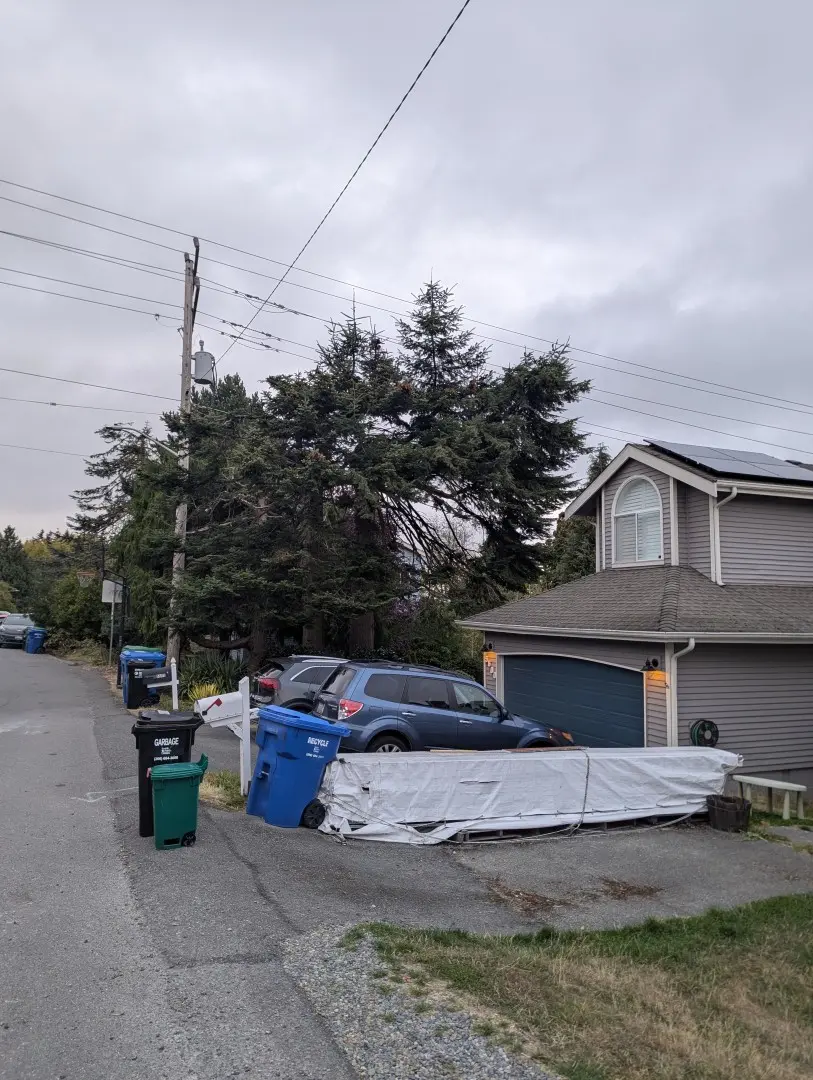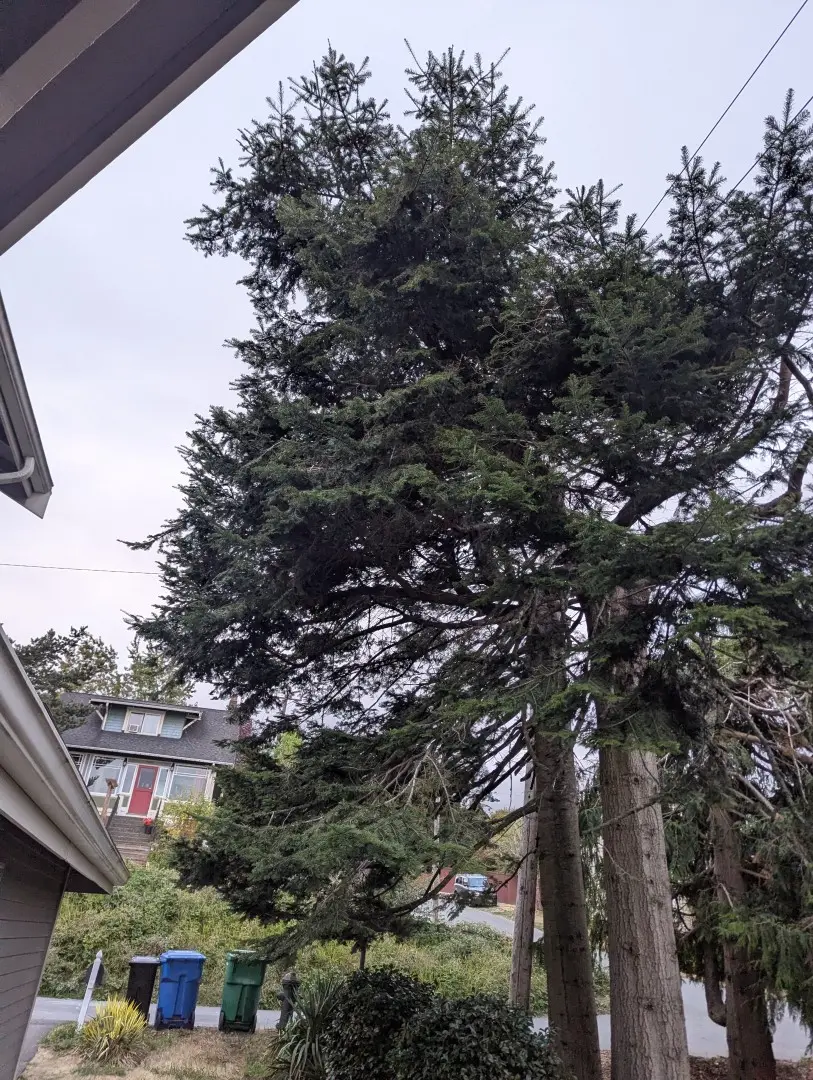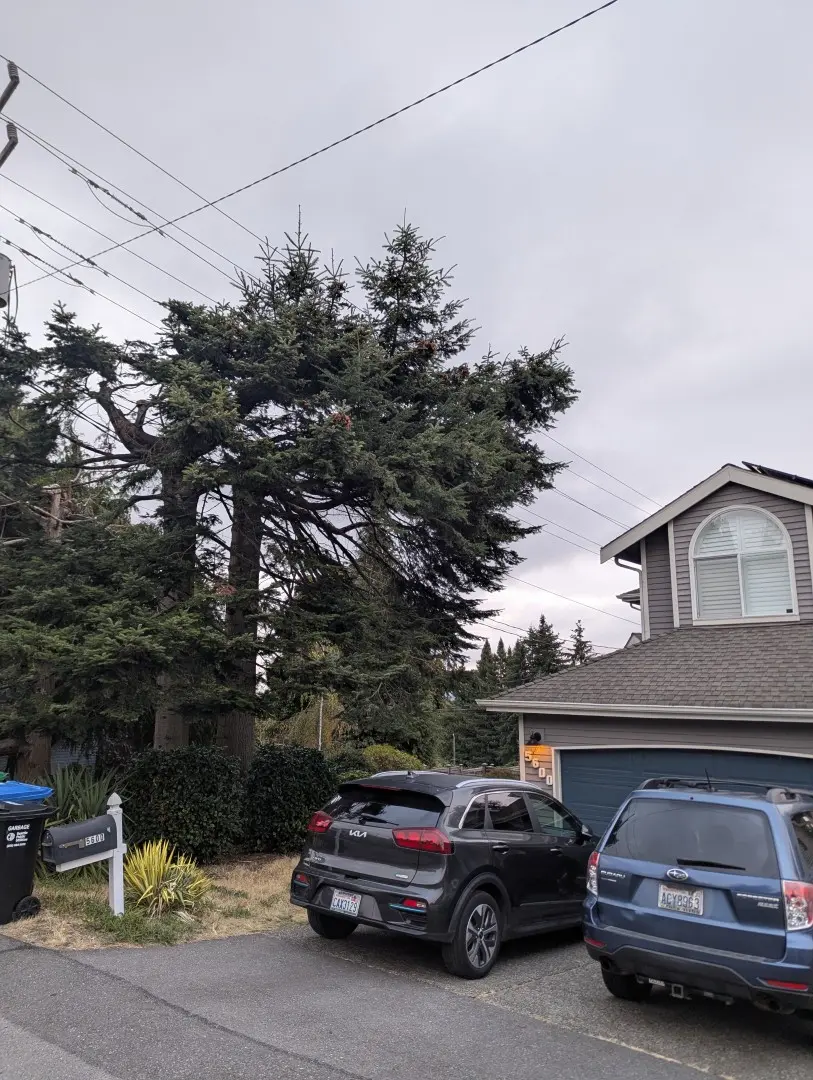
Which wires are which?
Look up at the pole in front of most Andover homes and you’ll see three kinds of wire, stacked by height:
- Primary lines at the top of the pole carry high-voltage power along the street. These are the dangerous ones and the main focus of the utility’s tree work.
- Secondary lines run lower on the pole and feed groups of houses at household voltage.
- The service drop is the single cable that runs from the pole, or from a nearby transformer, to the side of your house.
Below the power wires you’ll usually find cable, phone and internet lines. They carry little current, but they’re often attached on the same poles and can be pulled down by a falling limb along with everything above them.
What does National Grid trim?
National Grid supplies electricity in Andover and runs a scheduled tree program for its lines. According to the utility, crews return to each neighborhood every five to seven years to prune around the high-voltage lines, aiming for roughly 10 to 15 feet of clearance. Customers are told in advance by postcard, door hanger or in person when crews are coming.
That pruning is designed to keep the primary lines clear, not to shape trees for looks. The cuts can leave a tree lopsided or with a notch through the crown. If the tree is yours, you can ask the crew what they plan to remove, and you can follow up later with corrective pruning to balance the crown. National Grid also removes some dead or hazardous trees that threaten its lines; if you see one, report it to the utility.
Who handles the line to my house?
National Grid says it does not trim branches or remove trees that affect individual customer service lines. That makes the service drop the property owner’s responsibility, and it’s the line most likely to be brushed by your own trees, because it runs low across the yard.
That doesn’t mean you should prune near it yourself. The service drop carries enough voltage to kill, and insulation on older lines can be worn through where branches have rubbed for years. The safe way to handle it is:
- Call National Grid and ask whether the service can be disconnected or made safe while the tree work is done. Plan ahead, because this needs to be scheduled.
- Hire a tree company with line-clearance training to do the pruning.
- Have the crew prune for future growth, not just today’s gap, so the problem doesn’t come back next summer.
Stay ten feet awayOSHA and the national tree care safety standard keep anyone who isn’t line-clearance trained at least 10 feet from overhead power lines, and that includes ladders, pole saws and the branch you’re cutting. Electricity can jump to a tool or a branch without direct contact.
What about street trees under the wires?
Many Andover streets are lined with old maples and oaks planted long before the lines were run. Trees within the public way are public shade trees managed through the town’s tree warden, and the utility coordinates with the town on work along roads. If a town tree is growing into the wires in front of your house, contact the Department of Public Works rather than hiring someone to cut it. Our guide to tree removal rules in Andover explains how public shade trees are handled.
What should I do when a tree is on a wire?
During storms, limbs on wires are one of the most common reasons for outages in town, and they’re among the most dangerous things a homeowner will see.
- Assume every wire is live, including cable and phone lines, which can be touching a power line further along.
- Keep everyone, including pets, at least 30 feet back, and remember that wet ground and puddles can carry current.
- Report it to National Grid on its emergency line, 1-800-465-1212, or call 911 if there’s fire or immediate danger.
- Don’t try to pull or cut the limb free, even if the line looks dead.
Once the utility has made the line safe, a tree crew can deal with the rest of the tree. Our guide to preparing trees for nor’easters covers what to do before and after a storm.
How can you prevent problems?
Prune before branches reach the wire
The easiest line-clearance job is the one done early. Branches that are growing toward the service drop can be removed while they’re still a few feet away, using clean tree trimming cuts at the branch collar. Waiting until a limb is resting on the wire makes the job slower, riskier and more expensive.
Reduce, don’t top
Topping a tree under wires cuts the main stems to stubs. It buys a year or two, then the tree sends up dense, weakly attached sprouts that grow straight back into the lines. Crown reduction shortens limbs back to healthy side branches and keeps a natural shape, so the clearance lasts longer. For trees directly under wires, directional pruning, which trains growth away from the lines, works better than cutting the top off.
Check for decay and leaning
A tree that’s leaning toward the line, has a large dead limb over the wires or shows fungus at its base is a removal candidate, not a pruning job. Removing it on your schedule is safer than having it come down in an ice storm. See our tree removal page for how removals near structures and wires are planned.
Plant the right tree
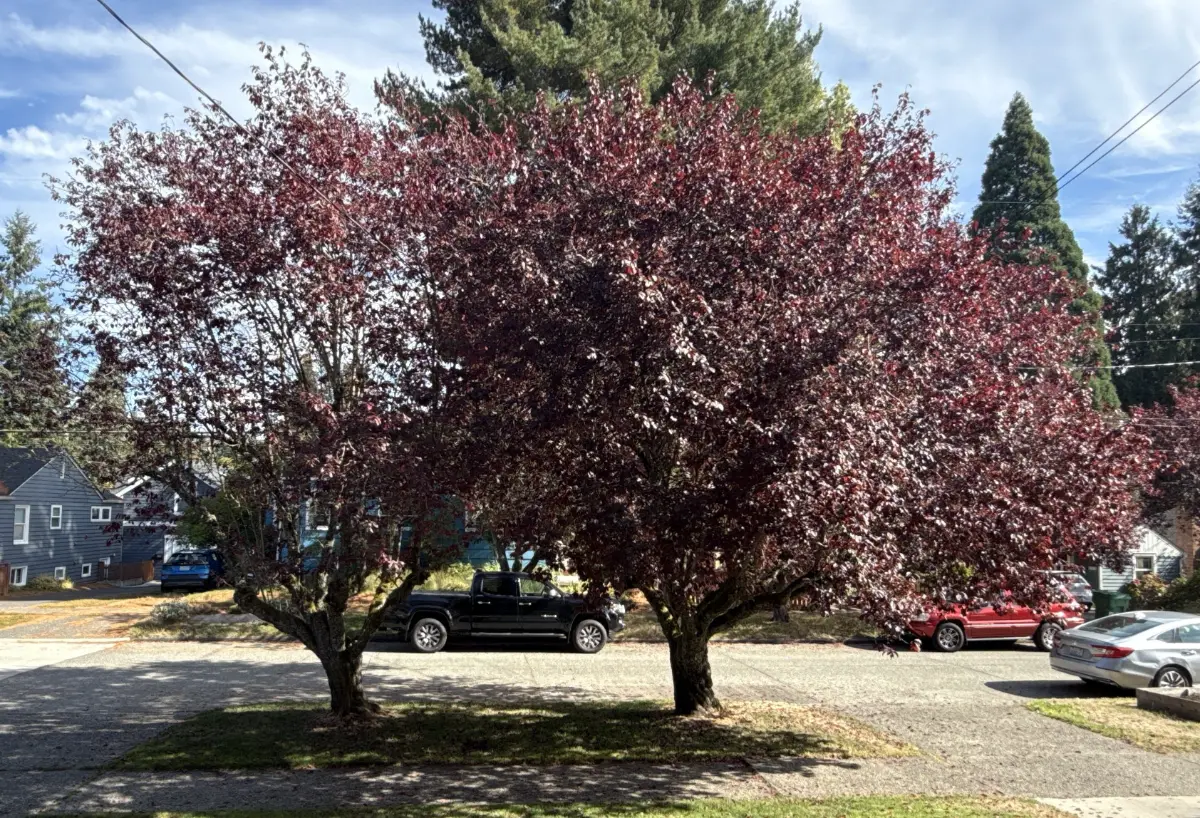
Most line problems start with a tree planted in the wrong place decades ago. Under or near wires, choose species that stay under about 25 to 30 feet at maturity. Our guide to the best trees to plant in Andover lists small trees that suit these spots, and large shade trees belong well away from any line.
A quick guide to who does what
| Situation | Who to contact |
|---|---|
| Branches near the high-voltage lines along the street | National Grid |
| A town tree growing into wires | Andover DPW and the tree warden |
| Your tree growing toward the line to your house | A line-clearance-trained tree company, after calling National Grid |
| A limb or tree down on any wire | National Grid emergency line, or 911 |
| Cable or phone line sagging from branches | The cable or phone company |
Call our team to look at the trees near your wires and plan pruning that keeps them clear for years, not months.
Trees and power lines: FAQs
Will National Grid trim the tree near the wire to my house?
Generally no. National Grid says it doesn’t trim trees affecting individual customer service lines. That’s the property owner’s job, and it should be done by a line-clearance-trained crew.
How often does National Grid trim trees in Andover?
The utility says it visits each neighborhood every five to seven years to prune around high-voltage lines, aiming for 10 to 15 feet of clearance.
Can I prune a branch that’s touching the service line myself?
No. Stay at least 10 feet away and call National Grid about making the line safe, then have a trained crew do the pruning.
Why does my tree look lopsided after the utility pruned it?
Line-clearance pruning removes whatever grows toward the wires. Corrective pruning afterward can balance the crown and remove awkward stubs.
What trees can I plant under power lines?
Choose small trees that stay under about 25 to 30 feet when mature, and keep large shade trees well away from the lines.